Welcome to Year 4 Willow Class
On this page, you can read about the staff working with your children, find out what topics are being covered and find useful information for supporting your child at home. These pages will be updated regularly. You will also find photographs of your children at work!
September 2025
Welcome to your new class- we hope you had a lovely break and we are looking forward to a great first term with you all.
Term 1
We will start this term looking at The Tin Forest. We will focus on building sentences by using conjunctions and fronted adverbials. We will use these to write a letter of advice to the old man, detailing how he could make his garden look even better.
We will also be writing our own version of the Sword in the Stone. We will write setting descriptions of the sword in the stone and character descriptions of Arthur. Our focus will be using adventurous vocabulary, with a particular focus on expanded noun phrases to set the scene for the reader.
Spellings:
We are following the Read, Write Inc Scheme which has a different focus each week. The children get to practise their new skills in a number of separate lessons across the week.
Term 2
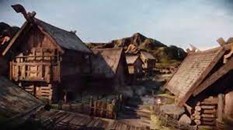
We will start this term looking at a film clip of a journey through a Viking village. We will be using adjectives to create expanded noun phrases and learning about how to add prepositions to explain where something is. These will then be used to create our own setting and character descriptions.
Towards the end of the term, we will be writing dialogue between the characters in our book, How to be a Viking. This will include learning how to write direct speech and remembering all of the punctuation needed. We will also be adding description to show a character's actions.

Term 4
This term, we will be linking our English to our curriculum topic all about the ancient Egyptians. We will be researching the daily life of an Egyptian and using this to write a diary entry about a worker who is building the pyramids.
We will then investigate the life of Howard Carter and his discovery of the tomb of Tutankhamun. There is much debate about whether Carter actually made the discovery himself or another Egyptian worker did, but Carter claimed it for his own. We will be looking at all of the evidence for and against and deciding who we think made the discovery!
Term 1 - Place value
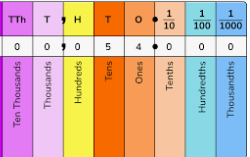
Our main focus in maths this term is Place Value.
We are learning to identify the value of each digit within a number, place numbers up to 10,000 on a number line and rounding numbers to the nearest 10, 100 and 1000. We will be using a range of resources to support understanding of place value.
To support with this at home, children can continue to practise these strategies by logging on to IXL and TTRockstars.
Term 2
We will begin with adding and subtracting numbers with up to 4 digits. Within this, we will look at formal written methods for these calculations, as well as learning how to estimate and use the inverse to check answers. We will also learn about mental strategies we could use to be more efficient with our calculations.
Towards the end of term, we will be learning to use formal written methods to multiply and divide numbers. Within this unit, we will continue to practise strategies for learning multiplication and division facts up to 12 x 12. We will also be linking this knowledge with understanding how to find the area of a shape.
Term 4
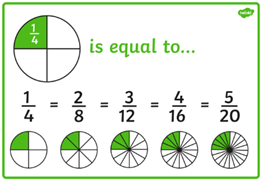
This term, we are mainly focusing on fractions. We will be adding and subtracting fractions with the same denominator, learning to keep the denominator the same when doing this. We will then apply our knowledge of times tables and division facts to help us find families of equivalent fractions. Later on in the term, we will again be using our times table knowledge to find the area of rectangles and other rectilinear shapes.
Sound
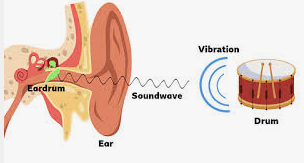
This term we will be learning all about sound. We will be investigating how a sound travels to your ear. We will also investigate how loud and quiet sounds are made as well as setting up our own enquiry to find out what happens to a sound the further away from the source you are and why.
Electricity
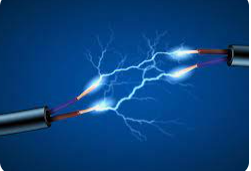
We will be learning all about which appliances run on mains electricity and which appliances are battery-powered. We will be making our won circuits and testing whether we can make a light bulb light up when our circuit is complete. Towards the end of the term, we will be investigating whether different materials are conductors or insulators of electricity by testing whether or not the lightbulb in a circuit still turns on.

Living Things
This term, we are looking at different animals and their habitats. We will be completing a walk of our local environment to investigate which animals live in these environments. Different animals adapt to their environments in different ways and animal adaptations will be a main focus of our learning this term.

what main changes were made during anglo-saxon rule?
We will be learning about the 7 kingdoms named by the Anglo-Saxons when they defeated Britain and how many of them are still used as our county names today. We will explore the reasons for the Anglo-Saxons staying in Britain after defeating the king and his army. We will also investigate how people's lives changed when they first brought Christianity over from Northern Europe. We will finish our topic investigating just how great Alfred the Great really was.
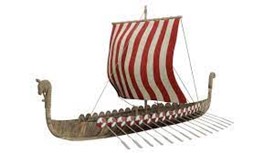
Vikings - Explorers or Villains?
Our topic in term 2 is the Vikings. We will be learning all about where they came from and how they travelled over to Britain on longboats. We will also be finding out about some of the battles they had against the Anglo-Saxons in the fight for land in England. Throughout the topic, we will be using evidence to help us answer our Big Question of 'Vikings - Explorers or Villains?'
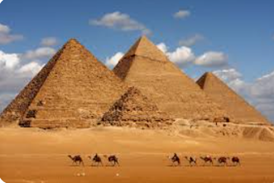
How did the ancient egyptians live their lives?
Our exciting topic all about the ancient Egyptians starts with our exploration of every day life during this time. We will research what they ate, wore, did for a living etc. We will also locate Egypt on a map and name specific places significant during ancient Egyptian times. Our topic will then take us on a journey to the Valley of the Kings to the discovery of Tutankhamun's tomb. We will learn all about Howard Carter and how it is believed he claimed to have found the huge, royal tomb.
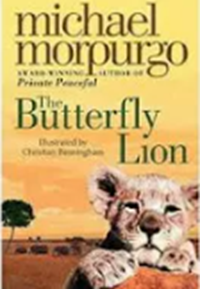
Term 1
Our first text this year is The Butterfly Lion by Michael Morpurgo. This is a moving tale of a young boy growing up in Africa, and his lifelong friendship with a white lion. We follow the friendship over the years, seeing them separated for many of these and finally reuniting. The story involves themes of friendship, resilience and freedom.

Term 2
Our class text this term is How to Train Your Dragon by Cressida Cowell.
This is an adventure story set in a fictional Viking world. It is the first book in a series of 12 and they focus on the experiences of Hiccup Horrendous Haddock the Third (son to the chief Viking) as he overcomes obstacles on his journey of "becoming a hero the hard way". This text has been chosen for its fantastic description, humour and use of Year 4 writing objectives, such as expanded noun phrases and adverbs.
If you enjoy this book, here are some suggestions of other books you might like to read.